


.png)
The "Construction Wall"
For decades, the standard response to airport congestion has been synonymous with the sound of jackhammers. When demand outpaces throughput, the industry instinct is to build: a new pier, a larger terminal, or another row of check-in desks. While physical infrastructure is essential, the modern aviation landscape is hitting a "Construction Wall."
Obtaining planning permission is increasingly difficult, building around rigid infrastructure is a logistical nightmare, and the capital expenditure required for physical expansion is often prohibitive. Furthermore, the lead times for planning and delivering new facilities can span a decade. This reality is compounded by the industry’s commitment to the IATA Net Zero 2050 Strategy, which dictates that future growth must be achieved through efficiency rather than just a larger physical footprint.
The question for the modern airport operator is no longer just "How much can we build?" but "How much capacity and revenue are we leaving on the table?" By leveraging intelligent solutions like Allegra RMS (Resource Management System), airports are discovering that the most cost-effective runway isn't made of asphalt—it’s made of data.
Squeezing the Lemon: Dynamic Resource Optimisation
The true capacity of an airport is often hidden in the inefficiency gaps of static planning. Legacy systems typically operate on fixed schedules that rarely survive contact with the reality of operational delays and weather disruptions.
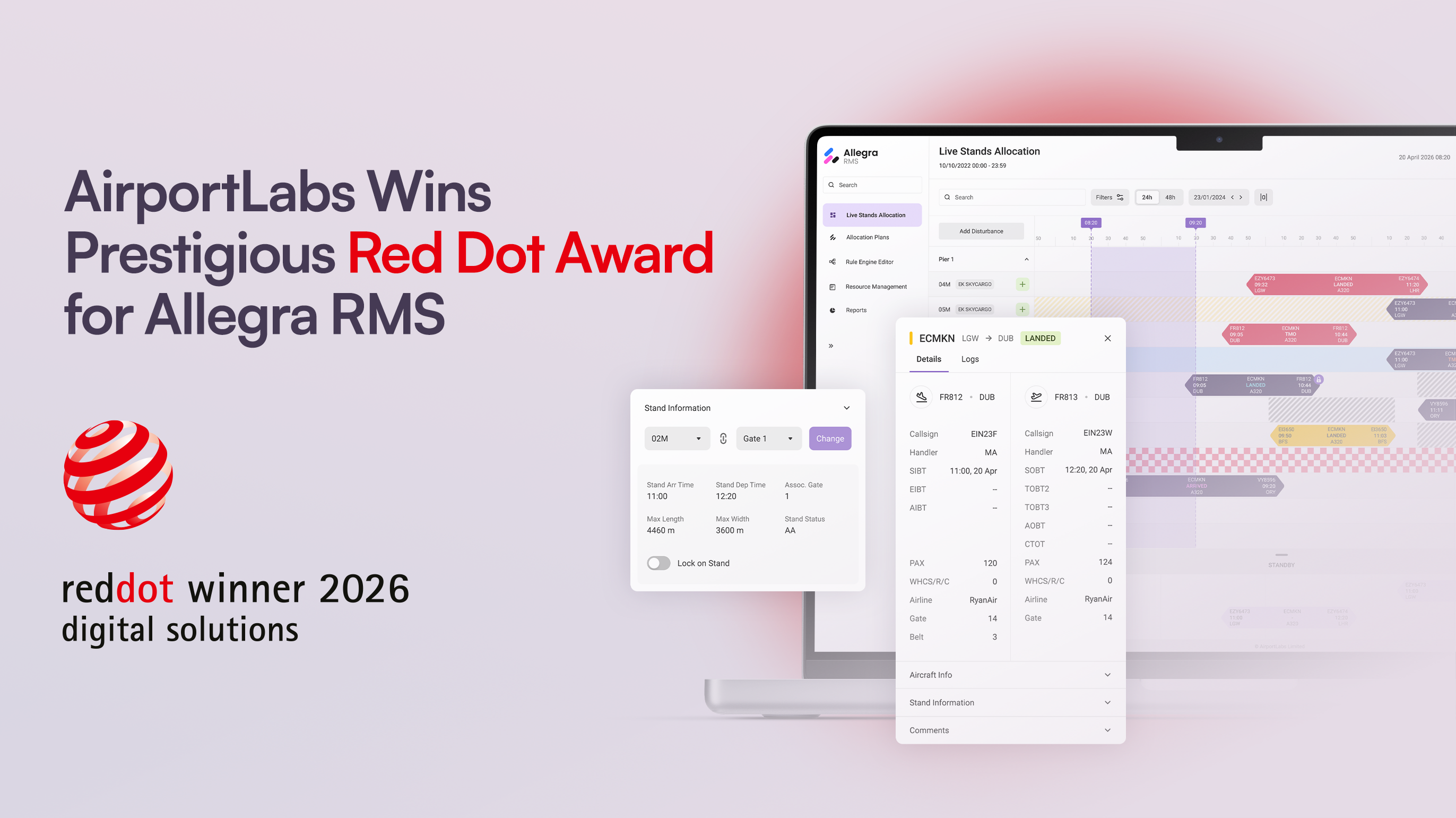
Allegra RMS shifts the paradigm from static scheduling to Dynamic Resource Allocation. Built for the scale of the world's busiest operations, it utilises a cloud-native architecture to provide a real-time, centralised view of every critical resource—gates, stands, check-in desks, and baggage belts.
Automating Efficiency
Instead of relying on manual intervention for every schedule change, Allegra employs Management by Exception. The system autonomously handles the vast majority of standard allocations and conflict resolutions using precise rules. It alerts human operators only when complex scenarios require strategic judgement, allowing staff to focus on high-value problem-solving rather than rote data entry.
This automation extends to Path Autonomy, where the system ensures flexible routings based on preferences, optimising the flow of aircraft from runway to stand. The result is a "squeeze" of the asset base that ensures no stand sits empty and no aircraft is left waiting. By maximising the utility of existing concrete, airports can accommodate higher traffic volumes without laying a single foot of new pavement.
Future-Proofing: Simulation and Scenario Planning
Capacity shortages often stem from a mismatch between static infrastructure and dynamic demand. To counter this, Allegra RMS integrates powerful Simulated Scenario Planning.
Operators can run "what-if" scenarios to test the resilience of their resource allocation against potential disruptions—such as a runway closure or a sudden surge in passenger numbers. This aligns with recent academic findings on the Role of Artificial Intelligence in Air Traffic Management, which highlight how predictive modelling can increase airspace and ground capacity. By anticipating failure states before they manifest, the system allows airports to validate operational changes without disrupting passengers.
Building "Trust as a Resource"
Perhaps the most critical asset unlocked by high-fidelity data is trust among stakeholders. Inefficiencies often arise when airlines, ground handlers, and airport operators lack shared situational awareness.
Allegra RMS does not function in a vacuum; it is part of the broader AirportLabs product portfolio, including the Airport Community App. This integration extends the pin-sharp picture of operations beyond the control room to the mobile devices of staff on the ground. Research into Trust Governance in Airline-Airport Relationships suggests that when data is transparent, transaction costs drop and operational friction disappears.
When all parties trust the data regarding aircraft positions, turnaround times, and gate availability, the system becomes robust. This transparency creates "Trust as a Resource," aligning stakeholders on operational decisions and reducing the buffering that causes congestion on aprons and in terminals.
Conclusion: The Data Dividend
The era of solving congestion solely through expansion is ending. With the scarcity of funds and the difficulty of acquiring land, the future belongs to operators who can mine their data for capacity. Whether it is optimising land lease revenue by 95% through better spatial analysis or using simulation to validate operational changes without disrupting passengers, the path forward is digital.
By adopting intelligent Resource Management Systems, airports can dismantle the "Construction Wall" and reveal the hidden capacity that has been there all along—waiting for the right data to unlock it.
Ready to Unlock Your Airport’s Hidden Capacity?
Don’t let physical constraints limit your growth. Discover how Allegra RMS can transform your operational data into a strategic asset, allowing you to scale efficiently without the need for costly construction.
Book a demo today: https://www.airportlabs.com/other/get-in-touch
.png)